
Traffic Court Records in Summit County
Most traffic cases in Utah are infractions or Class C misdemeanors. The Justice Court usually handles them. That makes the Summit County Justice Court the place where many Summit County citations land. Its clerk and staff maintain each court record. Through the court's page you can pay a fine. You can also reach MyCase, join a Webex hearing, or call and email the court directly. Anything heavier than a minor offense may sit at a different court level. So check which court is printed on the ticket. That court controls the case.
For a Utah traffic court docket, Xchange is the tool. The docket shows up there as Case History or Extended Case History. It can tie together the citation number, the violation date, the agency, the charge, the plea, proceedings, the disposition, and account entries. Together those lines build a timeline. Keep the meaning straight, though. A filed charge is not a conviction, and an amount in the account area says nothing about the merits of the case. The plea and disposition lines further down the docket tell you how it actually ended.
Summit County's Traffic-Heavy Docket
The FY2023 Justice Court table explains why the Summit County traffic docket search route matters. That year the county logged 9,070 total Justice Court filings. It recorded 8,791 dispositions alongside them. Traffic drove nearly all of it at 8,068 filings. The breakdown covers 6,106 traffic citations, 1,865 traffic court cases, 80 Deferred Traffic Prosecution filings, and 17 parking citations. Treat these as workload counts, not tallies of convictions or unique people.
The FY2023 statewide Justice Court report captures one past fiscal period. Its disposition percentage compares cases closed with cases filed that year. It is not an outcome rate.
How to Look Up a Traffic Ticket
Utah Courts Xchange offers citation-number and citation-location fields plus scope, party name, case type, county, court, and date filters. Type the number from the ticket first. Before relying on a result, confirm it names the Summit court, the right case type, the filing date, and a matching history.
- Read the ticket for its court, citation number, response date, and statute.
- Choose the correct jurisdiction in Xchange and enter the citation number and location.
- If needed, search by name and narrow by Summit County, case type, and date.
- Check the Utah court calendar and MyCase if the matter is linked to your account.
- If no result appears, call 435-615-3800 or email jcsummit@utcourts.gov, using the contact on the ticket if it differs.
- Visit the current Justice Court counter or request a specific record when online access does not answer the question.
A citation does not reach the docket instantly. A blank search result does not mean dismissal. Follow the issuing court's current instructions for written requests, mail, and any payment or plea. Never assume the general email accepts a formal filing.
Summit Traffic and Parking Citations
Three labels, three possible paths. A traffic citation routed to Summit County Justice Court becomes a state court matter. It is searchable in Xchange when public. A traffic court case is the file built from that citation and everything after it. A Park City parking citation stays with the city's administrative parking process instead.
| Record | Custodian | Search path |
|---|---|---|
| Traffic citation | Issuing court once filed | Xchange, ticket instructions, court contact |
| Traffic court case | Justice or District Court clerk | Case History, MyCase for a party, record request |
| Park City parking citation | Park City parking administration | City payment or administrative appeal route |
Park City traffic information sends Summit County citation questions to Justice Court. A state court ticket belongs there, not with the county Clerk, Recorder, or city parking office. Each of those keeps other public records.
Finding Your Traffic Court Date
The citation usually names a court and a response date or deadline. Verify it against the live calendar. You can also check Xchange history, a MyCase linked view, or the court itself. Utah's District and Justice calendar covers a two-week window. It updates daily. A reset, continuance, removal, new filing, or restricted matter may lag in some interfaces.
| Citation number | Use the exact value printed on the ticket, represented here only as CIT-EXAMPLE. |
|---|---|
| Court | Confirm Summit County Justice Court or the other court printed on the citation. |
| Date and time | Distinguish a response deadline from a scheduled hearing. |
| Hearing type | Read whether the listing is an arraignment, pretrial, trial, review, or another setting. |
| Location or link | Confirm whether current court instructions call for Webex or an in-person appearance. |
| Status | Read later history to see whether a setting was held, reset, or followed by an order. |
Summit County Justice Court holds hearings by Webex. That applies unless the court advises otherwise. It asks for a valid email so it can send the direct link. Call the court if you have no email. This local instruction does not apply to every Third District hearing.
Summit Traffic Hearings and Webex
Some calendar listings include a remote link. Others ask you to contact the court or assigned team. MyCase can show a linked party's next appearance. If a Webex link is missing, contact Summit County Justice Court. Do not reuse an old saved link. Even when a hearing appears online, the official notice still governs.
The current Utah calendar is the District and Justice entry point for a Summit County traffic hearing date.
Remember what the calendar is. It is a date tool, not the full case record. To learn what happened after a listed setting, pull the case history.
Note: When a date affects your response, compare the live calendar with the ticket and court notice. Weigh direct court contact too.
Paying or Contesting a Ticket
Paying and contesting are different choices in the same case. Utah's official traffic guidance says many infractions need no appearance. That applies when the court's payment route is used. Not every court offers the same option. Paying generally records a plea and disposition. Contesting means following the citation and the issuing court's directions for a plea and hearing.
| Paying | Contesting |
|---|---|
| Use the court and deadline on the citation | Contact the issuing court by its stated deadline |
| May be offered online, by mail, or at the counter | Follow the court's method for entering a plea |
| The case history can record plea, payment, and disposition | The docket can add a hearing or trial setting |
| Confirm the balance and completed status | Track later notices, settings, and orders |
The Summit page offers an online payment route. Staff also collect payments in person. Mail payments must follow the ticket and court instructions. Staff can explain the process, but they cannot promise an outcome or give personal legal advice.
Do not ignore a missed date: Read the docket and notice, then contact the issuing court promptly. Only the court can state the current consequence and steps for that case.
Utah's traffic page shows the official payment, appeal, and record distinctions.
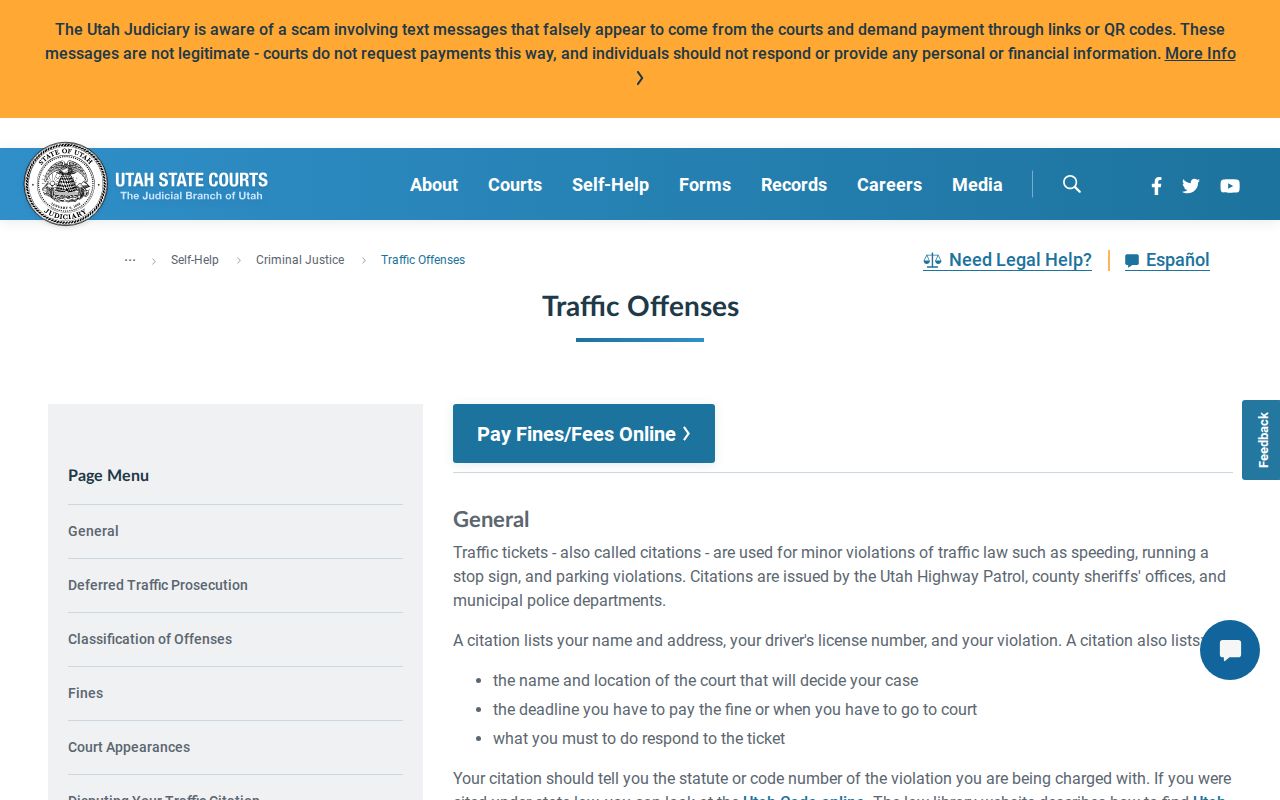
The issuing court's instructions always control. A traffic court case is also distinct from other government records kept elsewhere.
Summit Deferred Traffic Prosecution
Utah's Deferred Traffic Prosecution can resolve certain Summit County traffic tickets. No one is entitled to it automatically. Eligibility turns on age, license status, prior violations, and the type of case. Under the current program, an application may begin after five days. It must be filed within 21 days. An eligible driver enters a no-contest plea and pays the required amounts. If one year passes with no new qualifying violation, a dismissal may follow. The plea is real, and so are the deadlines. MyCase can be used where it applies.
The current Utah DTP page lays out the criteria, the steps, the traffic-school terms, and the deadlines. Those pieces spell out the whole program.
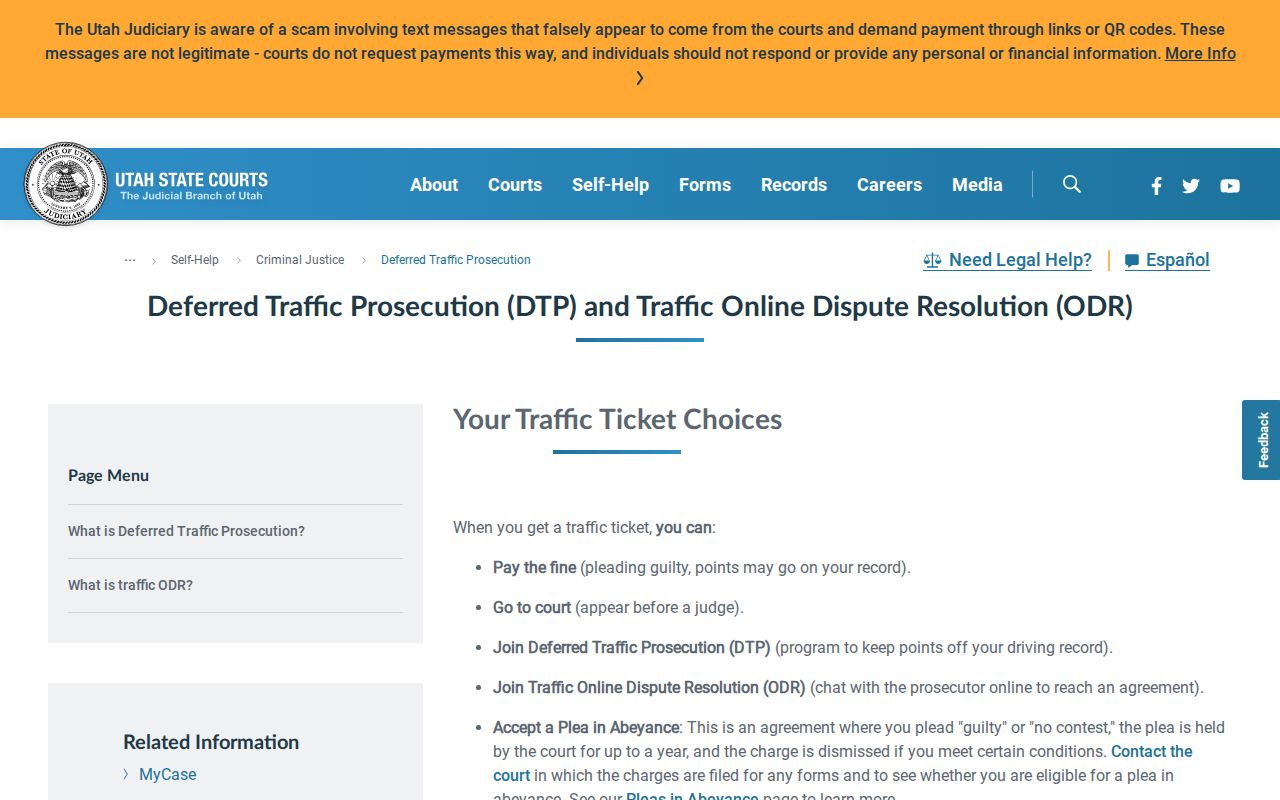
The dates run in a sequence. Five days, then 21 days, then one year. A driver who collapses them into "the ticket just goes away" is misreading the program. Nothing here means a Summit County traffic ticket vanishes on request.
One more caution. Utah's own court material lists Carbon, Orem, and West Jordan for online dispute resolution, and Summit is not on that list. That absence is not a forecast either way. Check the live program list before assuming Summit County participates, and never confuse ODR with DTP.
Court Traffic Record vs Driver Record
Utah keeps traffic information in two separate files, held by two separate offices. The Summit court clerk holds the citation case history: the plea, the proceedings, the disposition, the financial entries, and any filed papers. The state Driver License Division holds the driver record instead. Clearing the court file does not by itself clear the other one. The two files sit apart.
| Court traffic record | Utah driver record | |
|---|---|---|
| Kept by | Issuing court and its clerk | Utah Driver License Division |
| Shows | Citation, plea, hearings, disposition, fine | Driver-history data maintained by DLD |
| Get it | Xchange, clerk, or court-record request | DLD record-request channel |
The point is simple. Know which government record you are actually seeking. This Summit County traffic page sticks to the court file and the court date it contains.
Appealing a Summit Traffic Case
A Justice Court appeal starts where the judgment came from. Utah guidance gives a 28-day notice period. Review in District Court is de novo. The case is heard anew under the governing process. Two mistakes to avoid: one is treating an appeal as a way to edit a public Xchange result. The other is filing first with the Utah Court of Appeals. Neither works.
The issuing Justice Court sends up the certified register and papers. Before appealing, use the current Utah Courts appeal instructions, check the deadline tied to the judgment, and confirm the filing route with the court. A docket can help you find the judgment date. It cannot extend the deadline.
Fees and Copies
A public case search, an Xchange image, and a clerk-certified record are three different products. Each carries its own price. Utah's court-record request page sets paper copies at $0.25 per sheet. Storage media runs $15 per unit. Electronic audio or video costs $15 per half-day of testimony. Mail is billed at actual cost. Staff time is free for the first 15 minutes and charged after that. Xchange Purchase links generally cost $1 per available public document.
| Item | Current researched fee | Route |
|---|---|---|
| Paper copy | $0.25 per sheet | Correct court's record request |
| Xchange image | Generally $1 per document | Public Purchase link when available |
| Certified copy | $4 per document plus $0.50 per page | Court clerk |
| Exemplified copy | $6 per document plus $0.50 per page | Court clerk |
| Audio or video | $15 per half-day | Specific recording request |
The certified and exemplified rates come from the Utah fee schedule effective May 6, 2026. Check the current fee schedule before ordering anything. A written request normally gets an answer within ten business days, though record classification or retrieval can change that timing.
Summit Traffic Record Visibility
Public traffic dockets in Summit County still answer to Utah court-record classifications. Sealed and expunged matters do not show up in ordinary Xchange. Utah's 2026 guidance notes that MyCase may display "Case Expunged." The public Xchange case simply disappears. That change proves neither that the matter never existed nor that another agency's file changed to match. The current Utah expungement page explains how public visibility shifts.
The court clerk can explain the proper request route but cannot bypass a seal. The nonpublic-entitlement part of the official record form demands a lawful basis plus supporting proof. Utah's nonpublic-record guide also shows how protected data gets redacted or replaced. Visibility rules apply across the court docket.
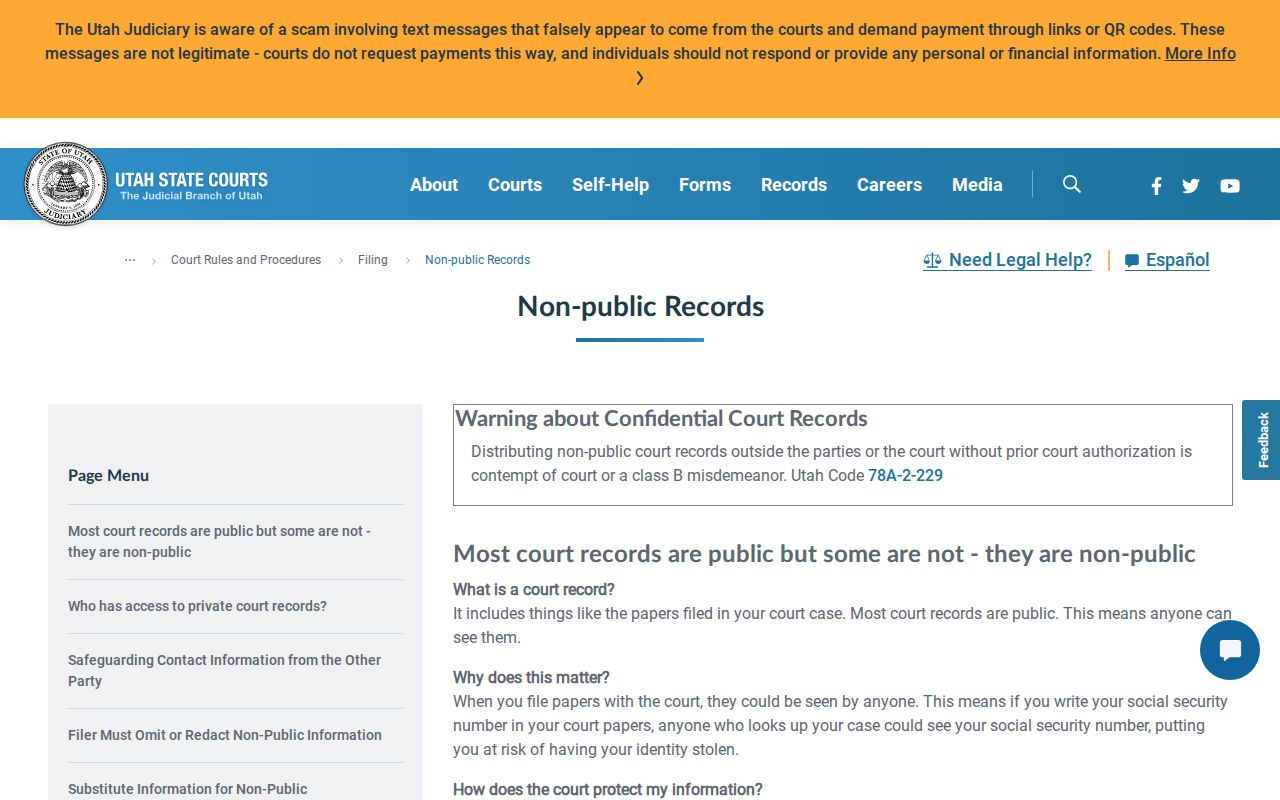
That is why a public copy can omit personal fields. The case history itself may still be open.
Missing Summit County Traffic Tickets
A new ticket may take time to appear in Xchange. First confirm the court and the citation location. Then retry the number exactly as printed. A blank result does not erase the response date printed on the ticket.
If the deadline is close, call the issuing court. Summit County Justice Court publishes 435-615-3800 and jcsummit@utcourts.gov, but a different current contact printed on the citation controls.
Summit Traffic Records at Court
Remote Xchange is not the only way in. Utah Courts reports free public terminals at most District locations and some Justice locations. Call ahead to confirm a Justice terminal and the current counter address. Official Summit pages give differing location text. The State Law Library also offers free Xchange access. For a copy, a recording, or a certified traffic record, send the court clerk a reasonably specific request. Name the court, the case or citation number, the date, and the item sought.
Summit Traffic Case Transfers
When a Justice Court appeal moves to District Court, the issuing clerk transmits the certified register and papers. The District case is more than a revised line in the original Xchange history. Trace that move properly by searching both court levels.
A transfer also explains why one case number cannot answer every question. Confirm the originating Summit County Justice Court record with that clerk. Confirm the later Third District Court matter with its clerk as well.